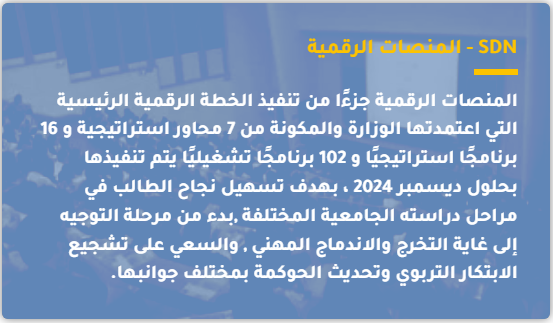

Plateforme des biotechnologies végétales aux services de la formation, la recherche et la création d’entreprises

Cette plateforme réalisée dans le cadre des activités du laboratoire de génétique, biochimie et biotechnologies végétales est dédiée à traiter des thématiques suivantes
- La génomique végétale
- Amélioration des plantes
- Biodiversité végétale
- Cytogénétique
plateforme biotechnologies végétales.PDF
Geoscience: Ups and downs
Unsettled markets lead to shifting employment prospects for petroleum geoscientists.
Steep declines in oil prices have decimated oil companies' profits and squeezed a once-booming demand for petroleum geoscientists. In a one-two punch, the price of oil plunged to a 12-year low and energy companies were forced to shed tens of thousands of jobs and slash their oil- and gas-exploration budgets.
The situation is the worst for some time. In January, the price of oil fell to less than US$28 per barrel, down from more than $100 per barrel in 2014 — squashing short-term employment prospects for geologists and geophysicists. Shell, one of the sector's largest companies, has already announced the loss of about 10,000 jobs, and its competitors Chevron and BP have also revealed cuts that number in the thousands. Worldwide, graduate programmes that for decades have been the leading suppliers of talent to energy companies can no longer instantly place their freshly hatched master's-level geoscientists.
Steve Satushek/Getty
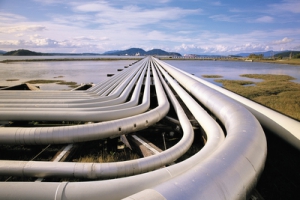
A petroleum pipeline at Anacortes, Washington.
“We've had at least a 50% drop in hiring — some major companies are not hiring at all,” says Maurine Riess, director of the geosciences career centre at the University of Texas at Austin, which historically has been a main pipeline for energy-company recruitment. And the master's programme in integrated petroleum geoscience at the University of Aberdeen, UK, another long-time provider, has also felt the impact: last year, one-quarter of its graduates could not immediately get industry jobs. Some of those who were hired elsewhere found roles in risk analysis or finance — fields that are distant from those in which they have trained.
Energy analysts predict a dim outlook for those seeking positions in geoscience for at least the next year (see 'Survival tips for petroleum geoscientists'). But demand for expertise in geology and geophysics is expected to grow in the longer term across the oil and gas industries owing to a pending wave of retirements, a growing demand for technical and leadership skills and a continuing need for oil. Analysts also foresee an increasing demand for this expertise in the environmental sector, notably in impact mitigation — the development and implementation of ways to reduce or eliminate the effects of oil and gas exploration and extraction on the environment.
Energy uncertainty
Instability is not unusual in the energy sector, and this most recent decline in the price of oil is due, very simply, to a glut of oil on the market. Between 2000 and 2008, the price of oil rose sharply and peaked at a record high of almost $150 per barrel. But then a global recession sent the price down to about $40 per barrel by the end of 2008. Although the subsequent economic recovery lifted the price over the next five years, by mid-2014, the price began to drop once more as demand decreased. And at the same time, production has risen in the Middle East, the United States and Canada. These factors have combined to create an unusual excess of oil.
Boom–bust cycles in the sector have produced an uneven workforce demographic that could actually mean good news for early-career geologists over the next five to ten years. The American Geosciences Institute (AGI) in Alexandria, Virginia, a network of associations that represents geoscientists, foresees a shortage of at least 135,000 professionals in the United States by 2022. Its forecast derives in part from the fact that many US geoscientists will soon be at or near retirement age. In academia, for example, the average faculty member in the United States is aged 60. “Half the industry's workforce is retiring in the next several years — with or without the downturn. That's a pretty big human-capacity gap that will have to get filled,” says Christopher Keane, the AGI's director of communications and technology.
And despite the present oversupply, energy companies must still pursue a certain level of oil exploration to remain profitable, says Stephen Barnes, director of the Economics and Policy Research Group at Louisiana State University in Baton Rouge. Barnes, who tracks the workforce needs of the oil industry, says that the discovery of new oil fields, a chief component of exploratory missions, requires a high level of expertise. Keane says: “The million-dollar question — and we can't answer this because companies hold that info tight — is, how many companies prepare for a rebound ahead of time and staff accordingly?” Barnes adds that when the demand for new recruits ramps up, skilled geoscientists are likely to be sought first because their specialized knowledge will be required for exploratory missions.
Early-career geoscientists should be aware that opportunities in the field will rise and fall with the price of oil. “The only constant in this industry is change, so be comfortable with that,” says Carlos Dengo, director of the Berg-Hughes Center for Petroleum and Sedimentary Systems at Texas A&M University in College Station. Here are some tips for working in the sector.
The pending retirement wave and a closer focus on climate change and environmental issues, notably in the area of mitigation, will open up opportunities for geoscientists. And the environmental implications of oil exploration and extraction will be an important driver of workforce demand in the near future, predicts Carlos Dengo, a former ExxonMobil executive and current director of the Berg-Hughes Center for Petroleum and Sedimentary Systems at Texas A&M University in College Station.
Those who focus on subsurface geology have the expertise to develop climate-change mitigation strategies such as carbon capture and storage (CCS), which aims to trap carbon dioxide underground to reduce atmospheric levels of greenhouse gases. “There is no way the world can meet greenhouse-gas emission goals without CCS,” says Philip Ringrose, a specialist in CO2 storage and petroleum geoscience at Statoil in Trondheim, Norway.
At the moment, no one can pinpoint if or when the demand will ramp up. The cost of CCS — and a lack of clarity over who will pay for and insure projects — has meant that its adoption has been uneven. Last November, the UK government cancelled its £1-billion ($1.4-billion) proposed investment in CCS, but both Norway and Canada have government-funded CCS projects under way. Despite the uncertainty, says Ringrose, research funding for CCS has been increasing worldwide.
While the energy sector is in a downturn, geoscientists can look to other fields, Keane points out. In previous periods of decline, their geospatial skills were in demand from the telecommunications industry for the siting of mobile-phone networks, and their proficiency in quantitative-problem management made them highly sought after by finance companies.
Beyond geoscience
Some energy analysts have questioned whether academia can produce the expertise that industry, governments and the non-profit sector will need over the next decade or so, given the ageing workforce and anticipation that the demand for training will exceed the capacity of existing programmes. The overall proportion of US federal funding that is allocated to academic geoscience research has fallen by half since the 1980s, when it represented 11% of basic-research funding. And any specific increases in funding for geoscience research have gone to the environmental or atmospheric sciences. The problem is exacerbated by the fact that geoscience departments in US and UK universities tend to rely on funding from the oil and gas industries, and that typically dwindles during downturns.
“When I started at Texas A&M 2 years ago, my centre had funding for 11 fellowships that came directly from industry. For 2016, I've got 4,” says Dengo. Up to 100 of the more than 400 geoscience master's programmes in the United States now produce most of the new employees for the oil and gas industries.
According to Dengo, these industries want to stop their pattern of slashing support during downturns, which compromises the interest and training of geoscientists. Some companies are eager to support efforts that combine industry and academic expertise to train PhD students. “We sponsor quite a lot of students and use that programme to find the ones we want to employ,” says Jonathan Craig, senior vice-president for exploration at Eni, an oil and gas company in Milan, Italy. And industry support has facilitated the creation of a training initiative in the United Kingdom. Eleven energy companies have contributed financially to the Natural Environment Research Council Centre for Doctoral Training (CDT) in Oil and Gas, located at Heriot-Watt University in Edinburgh, UK, where the British Geological Survey is also relocating 160 of its geoscientists.
" Despite the ups and downs of this industry, it is surprising how much geoscience skills remain in demand. "
With an investment of £10 million from the Natural Environment Research Council, industry and 17 universities, the CDT will produce at least 120 PhD graduates by 2021. Students conduct research and receive 20 weeks of training from industry experts who address the use of oil, energy regulation and the environmental impact of oil-related activities, among other topics.
Early-career geoscientists who receive training in these fundamentals could have an edge in the job market. CDT director John Underhill says that many industry executives complain that today's workforce lacks such a knowledge base. Four areas in particular — stratigraphy, structural geology, sedimentology and field geology — need to be bolstered to escape what he calls 'Nintendo' geology, an over-reliance on 3D mapping and visualization techniques.
Beyond a solid foundation in core geology, the most marketable geoscientists will also have strong quantitative and soft skills, which include communication, the ability to work in a team and sensitivity towards other cultures. To that end, Dengo has created three part-time teaching positions at Texas A&M that he will fill with former industry executives who can share their global experience and business acumen, as well as their specific areas of expertise.
The fundamental proficiency of geoscientists, their ability to remotely detect and assess what is happening within Earth, will prove most desirable both to employers in and outside the energy sector. “Despite the ups and downs of this industry, it is surprising how much geoscience skills remain in demand, even during difficult times,” says Ringrose.
ملتقى وطني حول التعديل الدستوري الجزائري لسنة 2016

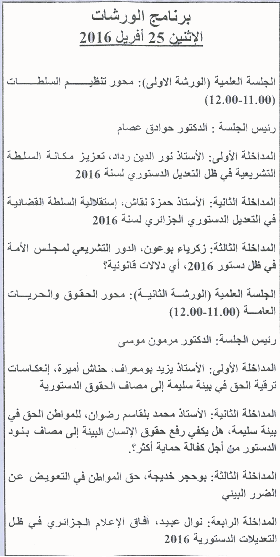
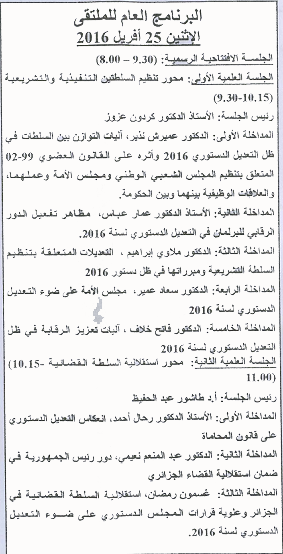
2016 تنظم كلية الحقوق جامعة الإخوة منتوري قسنطينة ملتقى وطني حول: “التعديل الدستوري الجزائري لسنة 2016 وأثره على منظومة قوانين الجمهورية” أيام 25 – 26 أفريل
اشكالية الملتقى
إن القراءة الأولية للقانون المتضمن تعديل الدستور المصادق عليه من قبل البرلمان الجزائري المنعقد بغرفتيه معا يوم 7 فيفري 2016، تلخص إلى حتمية المساس بالمنظومة القانونية للجمهورية، سواءا بسن قوانين جديدة أو تعديل قوانين سارية المفعول، عضوية كانت أم عادية، وهو ما يتطلب فتح ورشة عمل كبيرة على مستوى البرلمان والحكومة، بإعتبارهما يملكان حق المبادرة بالقوانين طبقا لأحكام الدستور، لعل ذلك هو سبب استعجال السيد رئيس الجمهورية عبد العزيز بوتفليقة استحداث خلية على مستوى رئاسة الجمهورية “بعد المصادقة البرلمانية مباشرة على نص التعديل الدستوري” مهمتها متابعة مدى تجسيد وتنفيذ التعديلات الدستورية المذكورة أعلاه.
ومن هذا المنطق، ارتأت كلية الحقوق بامعة الإخوة منتوري بقسنطينة تنظيم ملتقى وطني بعنوان “التعديل الدستوري الجزائري لسنة 2016 وأثره على منظومة قوانين الجمهورية”، بغرض تسليط الضوء على أهم ما جاء به التعديل الدستوري، من جهة، ومن جهة ثانية إبراز أهم المجالات التي يتعين سن قوانين جديدة بشأنها أو تعديل القوانين المنظمة لها سواءا كانت عضوية أم عادية، والمساهمة آكاديميا بإثرائها عبر رفع توصيات واقتراحات بشأنها من جهة ثانية.
ترتيبا لما سبق، فإن إشكالية الملتقى تدور حول: ما هي أهم التعديلات التي جاء بها القانون المتضمن تعديل الدستور لسنة 2016؟، وما أثرها على منظومة قوانين الجمهورية (القوانين العضوية والعادية)؟.
محاور الملتقى
محاور الملتقى:
المحور الأول: التعديلات الدستورية ذات الصلة بحرية الاستثمار والتجارة وتحسين مناخ الأعمال وضبط السوق وحماية حقوق المستهلكين ومنع الاحتكار والمنافسة غير النزيهة، والمساواة في أداء الضريبة ومعاقبة التهرب الجبائي وتهريب رؤوس الأموال.
المحور الثاني: التعديلات الدستورية المتعلقة بعدم المساس بالحقوق والحريات الفردية والجماعية ذات الصلة بقانون العقوبات وقانون الإجراءات الجزائية وغيرها من القوانين وقانون الاجتماعات والمظاهرات العمومية وقانون الإعلام دون أمر معلل من السلطة القضائية ومختلف الجرائم التي تمت دسترتها.
المحور الثالث: التعديلات الدستورية بالأحزاب السياسية والجمعيات والديمقراطية التساهمية على مستوى الجماعات المحلية، ونظام الانتخابات، وعدم تقييد الحقوق المدنية والسياسية للمواطن إلا بموجب قرار مبرر من السلطة القضائية.
المحور الرابع: التعديلات الدستورية المعنية بحقوق الطفل وقمع العنف ضد الأطفال وحق العامل في الضمان الاجتماعي وترقية التمهين، واستحداث مناصب الشغل، وحق المواطن في بيئة سليمة والحفاظ عليها وواجبات الأشخاص الطبيعيين والمعنويين لحمايتها.
المحور الخامس: التعديلات الدستورية الخاصة بتنظيم المجلس الوطني ومجلس الأمة وعملها، وعلاقتهما بالحكومة.
المحور السادس: التعديلات الدستورية المرتبطة باستقلالية السلطة القضائية والرقابة الدستورية على القوانين والأنظمة، ومراقبة الانتخابات.
Récits de voyage et témoignages sur Constantine ; Des œuvres majeures revisitées par Nedjma Benachour
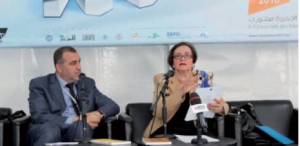
Un public intéressé a assisté, hier, à une conférence très instructive animée par Nedjma Benachour-Tebbouche autour du thème «L’image de
Constantine dans la littérature algérienne», organisée en marge du Salon national du livre, qui se tient du 11 au 16 avril à l’université Mentouri de Constantine. Maîtrisant parfaitement son sujet, qui a fait l’objet d’une thèse de doctorat d’Etat autour de la représentation littéraire de Constantine à travers différents genres, l’intervenante, professeur à l’université Mentouri, relèvera que contrairement à plusieurs autres villes d’Algérie, l’antique Cirta a suscité depuis des siècles la curiosité des voyageurs et des hommes de lettres, qu’elle a inspirés de par sa lisibilité et ses sites naturels uniques au monde.
Abordant le volet des voyages, elle citera les illustres Salluste, El Idrissi, El Bakri, et autres Ibn Battouta, Thomas Shaw et le non moins illustre Mohamed Ibn El Hassan Al Ouazzan, célèbre sous le nom de Léon l’Africain. C’est dire que La Cité aérienne a toujours fasciné par ses vestiges. Elle le fera aussi pour Eugène Fromentin, devenu peintre après avoir été émerveillé par les Gorges du Rhummel, mais l’on retrouvera également d’autres célébrités à la notoriété avérée dont la ville a laissé des traces éternelles dans leurs œuvres à l’image de Théophile Gautier, Alexandre Dumas, Guy de Maupassant, mais surtout Gustave Flaubert, qui a carrément repris sa célèbre œuvre Salambô, après avoir visité le Vieux rocher.
«Toutes ces œuvres pleines d’une forte charge esthétique sont très importantes pour la ville. Elles font désormais partie de son patrimoine, car Constantine y est très présente, c’est pour cela, qu’on doit se sentir nous aussi partie prenante et on doit penser à les éditer et les publier à grande échelle pour qu’elles soient consultées et facilement accessibles», notera Nedjma Benachour. Sur le volet des témoignages consacrés à la ville, la conférencière citera les innombrables travaux réalisés aussi bien par des juifs (Guy Bensimon et Benjamin Stora), mais surtout les autochtones, à l’instar de Malek Bennabi qui en a consacré de larges passages dans son illustre Mémoires d’un témoin du siècle, Malek Haddad dans La dernière impression et autres Nadjia Abeer, Badreddine Mili, Rachid Boudjedra et le comique Smaïn.
«Constantine est une ville incontournable dans le roman algérien au point que l’on parle du roman constantinois», affirme la conférencière, qui note que depuis la guerre de libération jusqu’à nos jours, en passant par la décennie noire des années 1990, l’antique Cirta est toujours présente dans les œuvres de nombreux romanciers. «Dans les œuvres de Kateb Yacine, Malek Haddad, Rachid Boudjedra, Tahar Ouattar, Rachid Mimouni et autres, Constantine est parfois un refuge fictif ou anthologique, parfois un espace cathartique face à la violence, et dans bien des cas une ville emblématique», indique Nedjma Benachour, pour qui Constantine, qui jouit également d’une grande richesse en littérature orale, continuera toujours à susciter les curiosités et les réflexions.
Arslan Selmane
Salon national du liver de Constantine à l'université des frères Mentouri du 11-16 avril 2016

ARAK EDITION Adresse : Résidence Ennour, immeuble n° 02, Béni Messous, Alger Tél. : 021 93 68 60 0661 94 18 75 Fax : 021 93 02 88 Émail : Cette adresse e-mail est protégée contre les robots spammeurs. Vous devez activer le JavaScript pour la visualiser. arak.editions@ arak.dz www.arakeditions.dz Spécialité : Livre pour enfants
CIRTA BOOKS EDITIONS DES LIVRES Adresse : Cité 11-Décembre-1960, n° 384 Tél. : / Fax : 031 61 19 39 Émail : Cette adresse e-mail est protégée contre les robots spammeurs. Vous devez activer le JavaScript pour la visualiser. Spécialité : Préhistoire, anthropologie, histoire
CLIC EDITIONS Adresse : Cité Les Dunes Bt A n° 22, 23 El Mohammadia -Alger- Tél. : 021 82 96 37 05 50 58 30 83 Fax : 021 82 96 37 Émail : Cette adresse e-mail est protégée contre les robots spammeurs. Vous devez activer le JavaScript pour la visualiser. Spécialité : LAP 43-2--el-e-rVI p.1.11 yla'S11
DAR BENI MEZGHANA Adresse : Haï Baha, lot 89, Lido, Mohammadia, 16058 Alger Tél. : 021 89 93 45 0561 00 84 34 Fax : 021 89 93 45 Émail : Cette adresse e-mail est protégée contre les robots spammeurs. Vous devez activer le JavaScript pour la visualiser. http://www. mezghana.net Spécialité : Livres universitaires
DAR EL NOUBA Adresse : BP 193 zone industrielle Ain M'lila Tél. : 032 44 95 47 021 96 62 20 Fax :021 96 61 11 032 44 94 18 Émail : Cette adresse e-mail est protégée contre les robots spammeurs. Vous devez activer le JavaScript pour la visualiser. Spécialité : Informatique CADOC Adresse :147, Bois des Cars 3, Dely Ibrahim, Alger Tél. : 021 91 03 52 Fax : 021 91 03 51 Émail : Cette adresse e-mail est protégée contre les robots spammeurs. Vous devez activer le JavaScript pour la visualiser. Spécialité : Patrimoine
CASBAH EDITIONS Adresse : Villa n°6, Saïd Hamidine, 16012 Hydra, Alger Tél. : 021 54 79 10 Fax : 021 54 72 77 Émail : Cette adresse e-mail est protégée contre les robots spammeurs. Vous devez activer le JavaScript pour la visualiser. Spécialité : Romans, essais, poésie, ouvrages universitaires et de gastronomie CENTRE NATIONAL DE RECHERCHES PRÉHISTORIQUES ANTHROPOLOGIQUES ET HISTORIQUES (CNRPAH) Adresse : 03, rue Franklin Roosevelt, Alger Tél. : 021 61 25 96 Fax : 021 74 79 29 021 71 73 17 Émail : Cette adresse e-mail est protégée contre les robots spammeurs. Vous devez activer le JavaScript pour la visualiser. Spécialité : Importation et distribution de documentation 7
DHAKIRET EL OUMA DAR EL OUMMA Adresse : Tél. : 021 55 06 68 Fax : 021 55 05 73 Email : Cette adresse e-mail est protégée contre les robots spammeurs. Vous devez activer le JavaScript pour la visualiser. Spécialité : Adresse : BP 109 Bordj El Kiffan, Alger Tél. : 023 31 33 06 Fax : 023 31 36 57 Email : Cette adresse e-mail est protégée contre les robots spammeurs. Vous devez activer le JavaScript pour la visualiser. Spécialité : Histoire, littérature, culture
EDICULTURE DAR EL YAMINE Adresse : Centre commercial, coop. Afak, Gué de Constantine Tél. : 023 45 01 33 Fax : 023 45 01 33 Email : Cette adresse e-mail est protégée contre les robots spammeurs. Vous devez activer le JavaScript pour la visualiser. Spécialité : Culture générale Adresse : UV5 Ali Mendjli, n° 185, El Khroub Tél. : 0770 31 34 34 Fax : / Email : Cette adresse e-mail est protégée contre les robots spammeurs. Vous devez activer le JavaScript pour la visualiser. Spécialité :
DAR HAMDENE EDIF 2000 Adresse : 57, chemin Romain, Birkhadem, Alger Tél. : 023 56 14 36 Fax : 023 56 14 57 Email : Cette adresse e-mail est protégée contre les robots spammeurs. Vous devez activer le JavaScript pour la visualiser. edif2000boila@yahook Spécialité : Livres enfants et de jeunesse Adresse : 40, rue D, secteur D, Bordj Bou Arréridj Tél. : 035 69 65 64 0551 01 73 69 Fax : 035 69 65 64 Email : Cette adresse e-mail est protégée contre les robots spammeurs. Vous devez activer le JavaScript pour la visualiser. Spécialité : Culture générale et médecine
DAR KOTAMA EDITIONS ALMOUDJTAHID Adresse : Cité hayat bt A2 N°05 gue constantine Tél. : 0771 42 58 12 Fax: / Email : Cette adresse e-mail est protégée contre les robots spammeurs. Vous devez activer le JavaScript pour la visualiser. Spécialité : Adresse : n° 220, Bordj El Kiffan, Alger Tél. : 021 87 03 91 Fax : 021 87 03 91 Email : Cette adresse e-mail est protégée contre les robots spammeurs. Vous devez activer le JavaScript pour la visualiser. Spécialité : Littérature, livres scientifiques et dictionnaires DAR-EL-MOSSABARA
EDITIONS ALPHA Adresse : Haï Kaidi 3, lot n° 3, Bordj El Kiffan Tél. : 023 94 01 10 0662 11 98 84 - 0659 42 41 86 Fax: / Email : Cette adresse e-mail est protégée contre les robots spammeurs. Vous devez activer le JavaScript pour la visualiser. Spécialité : Adresse : Palais des Expositions, Pins Maritimes, Alger Tél. : 021 21 07 71 Fax : 021 21 07 73 Email : Cette adresse e-mail est protégée contre les robots spammeurs. Vous devez activer le JavaScript pour la visualiser. Spécialité : Livres enfants, livres d'histoire, livres parascolaires
ERRISSALA EL DJAZAIR Adresse : 32, ferme Pons, Kouba, Alger Tél. : 021 28 17 23 Fax :021 28 17 23 Email : / Spécialité : Livres électroniques, langues Adresse : 77, lot Belhaddad, Chéraga, Alger Tél. : 023 37 10 47 Fax : 023 37 10 47 Email : Cette adresse e-mail est protégée contre les robots spammeurs. Vous devez activer le JavaScript pour la visualiser. Spécialité : Généraliste
EDITIONS DALIMEN FALCON BOOK Adresse : Cité frères Bouterfa, n° A5 Tél. : 031 61 98 88 Fax : 031 61 94 04 Émail : Cette adresse e-mail est protégée contre les robots spammeurs. Vous devez activer le JavaScript pour la visualiser. Spécialité : Livres religieux et scientifiques
FEEDBACK EDITION Adresse : 6, rue des Fidayine, Télemly, Alger Tél. : 021 63 09 92 Fax : 021 63 09 93 Email : Cette adresse e-mail est protégée contre les robots spammeurs. Vous devez activer le JavaScript pour la visualiser. Spécialité : Enfants LA LIBRAIRIE INTERNATIONAL LE VIEUX ROCHER Adresse : Rue Bidi Louiza, n° 09, Constantine Tél. : 031 92 25 07 Fax : / Email : Cette adresse e-mail est protégée contre les robots spammeurs. Vous devez activer le JavaScript pour la visualiser. Spécialité : Enfants LA MONDIALE DU LIVRE ET DE LA BUREAUTIQUE Adresse : 390, Parc Ben Omar, Kouba, Alger Tél. : 023 92 40 92 0550 23 45 14 Fax : 023 92 40 92 Email : Cette adresse e-mail est protégée contre les robots spammeurs. Vous devez activer le JavaScript pour la visualiser. Spécialité : Romans, littérature, enfant, culture, générale, beaux livres, santé
EDITIONS TALANTIKIT Adresse : 04, rue Si El Noués, 06000 Béjaïa Tél. : 034 17 45 61 Fax : 034 17 45 61 Email : Cette adresse e-mail est protégée contre les robots spammeurs. Vous devez activer le JavaScript pour la visualiser. Spécialité : Beaux livres, BD, patrimoine, romans et de jeunesse EL FAIROUZ CULTURELLE PRODUCTION Adresse : 8, haï Gaaloul, Bordj El Bahri, Alger Tél. : 0557 10 91 63 Fax : 021 74 48 44 Email : Cette adresse e-mail est protégée contre les robots spammeurs. Vous devez activer le JavaScript pour la visualiser. Spécialité : Romans EL IBRIZ Adresse : 5 Lots Ahmed Kouchi, bt 2, n° 2, Dely Ibrahim Tél. : 023 27 43 17 0553 94 36 70 Fax : 023 27 43 17 Email Cette adresse e-mail est protégée contre les robots spammeurs. Vous devez activer le JavaScript pour la visualiser. Spécialité : Divers
EL WAFFA EDITION ÉLÉCTRONIQUE Adresse :10, rue Hadj Mohamed Al-Mokrani, Tél. : 036 82 11 37 Fax : 036 82 11 37 Email : Cette adresse e-mail est protégée contre les robots spammeurs. Vous devez activer le JavaScript pour la visualiser. Spécialité : Généraliste 9 LES EDITION BELKEISE OFFICE NATIONAL DES DROITS D'AUTEUR ET DROITS VOISINS (ONDA) Adresse : 49, rue Hamla Abderrezak, Bologhine, Alger Tél. : 021 95 12 36 Fax : 021 95 11 88 021 95 17 53 Émail : Cette adresse e-mail est protégée contre les robots spammeurs. Vous devez activer le JavaScript pour la visualiser. Spécialité : Larousse, Oxford, jeunesse Adresse : Cité Chaâbani, coopérative le Tassili, bt A, n°6, Dar El Bela Tél. : 021 50 54 02 Fax : 021 50 54 02 Émail : Cette adresse e-mail est protégée contre les robots spammeurs. Vous devez activer le JavaScript pour la visualiser. Spécialité : Romans,Livre jeunesse , culture générale,et livres pratiques
OMEGA INTERNATIONAL
LES EDITIONS DU CHAMP LIBRE Adresse : Cité Naftal, RN 36, local n° 27, Ouled Fayet Tél. : 0557 00 37 40 Fax : / Émail : Cette adresse e-mail est protégée contre les robots spammeurs. Vous devez activer le JavaScript pour la visualiser. Spécialité : z, Adresse :10, rue Abdelkrim Boubartakh, N-i, Constantine Tél. : 0770 12 22 81 031 93 26 58 Fax : 031 93 26 58 Émail : Cette adresse e-mail est protégée contre les robots spammeurs. Vous devez activer le JavaScript pour la visualiser. Spécialité : Droit
ORGANISATION NATIONALE DES EDITEURS DE LIVRES MAISON D'EDITION Z-LINK tï11,5)...tILLJ Et ilncyj14pkioll (ONEL) Adresse : BP 228, Poste HBB, 16037 Tél. : 021 65 60 19 Fax : 021 65 60 19 Émail : Cette adresse e-mail est protégée contre les robots spammeurs. Vous devez activer le JavaScript pour la visualiser. Spécialité : Histoire, culture, politique Adresse : 25 - 00213 a-4- 50 99 Tél. : 00213 0661 55 90 90 0550 90 00213 0770 36 50 66 Fax : 00213 021 96 61 11 Émail : Cette adresse e-mail est protégée contre les robots spammeurs. Vous devez activer le JavaScript pour la visualiser. Spécialité : livre scientifique et médical PAGES BLEUES INTERNATIONALES Adresse : Cité Smail Yefsah, bt 37 B, Bab Ezzouar, Alger Tél. : 023 93 81 64 Fax : 023 93 81 82 Émail Cette adresse e-mail est protégée contre les robots spammeurs. Vous devez activer le JavaScript pour la visualiser. Spécialité : Histoire, littérature, enfants et dictionnaires
MAISON DES LIVRES ET DE LA BUREAUTIQUE Adresse : Lotissement Essalem 2, n° 94, Birkhadem, Alger Tél. : 023 57 64 57 Fax : 023 57 64 87 Émail : Cette adresse e-mail est protégée contre les robots spammeurs. Vous devez activer le JavaScript pour la visualiser. Cette adresse e-mail est protégée contre les robots spammeurs. Vous devez activer le JavaScript pour la visualiser. Spécialité : Livre pour enfants, romans, de jeunesse et culture générale MEGAPOINT Adresse :138, rue Boudjemâa Temime, Draria,16050 Alger Tél. : 023 26 86 42 Fax : 023 26 86 42 Émail : Cette adresse e-mail est protégée contre les robots spammeurs. Vous devez activer le JavaScript pour la visualiser. Spécialité : Histoire, littérature, enfants et dictionnaires 10
SCIENCE ET SAVOIR Adresse : Cité 194 logts, bt 14, local 06, Oued Ouchayeh, Bach Djerah, Alger Tél. : 021 29 89 49 Fax : 021 29 89 49 Émail : Cette adresse e-mail est protégée contre les robots spammeurs. Vous devez activer le JavaScript pour la visualiser. Spécialité : Essai, roman, de jeunesse et parascolaire SEDIA Adresse : Cité les Mandariniers, lot 293, El Mohammadia, Alger Tél. : 021 21 90 16 Fax : 021 21 90 16 Email : Cette adresse e-mail est protégée contre les robots spammeurs. Vous devez activer le JavaScript pour la visualiser. Spécialité : Sciences et technologie
TECHNO-SCIENCES Adresse : Lotissement les Cyprès, n° 54, Zouaghi Tél. : 031 69 11 10 Fax : 031 69 11 10 Email : Cette adresse e-mail est protégée contre les robots spammeurs. Vous devez activer le JavaScript pour la visualiser. Spécialité : Essais, littérature et scientifiques THALA EDITIONS Adresse :17 bis, rue des Sables rouges, El-Biar, Alger Tél. : 021 92 42 11 Fax : 021 92 42 11 Email : Cette adresse e-mail est protégée contre les robots spammeurs. Vous devez activer le JavaScript pour la visualiser. Spécialité : Littérature, histoire, sciences politiques et droit TIDII(ELT Adresse : 3, rue Larbi Tebessi, Bordj El Kiffan, Alger Tél. : 023 80 02 36 Fax : 023 80 02 36 Email : Cette adresse e-mail est protégée contre les robots spammeurs. Vous devez activer le JavaScript pour la visualiser. Spécialité : Lrlij‘tyj13 .4,123
QUINTESSENCE Adresse : UV5 Ali Mendjli, n° 185, El Khroub Tél. : 0770 31 34 34 Fax: / Email : Cette adresse e-mail est protégée contre les robots spammeurs. Vous devez activer le JavaScript pour la visualiser. Spécialité : Revues et livres RAMA EDITION ET IMPRESSION Adresse : 7, rue Debah Louiza, Bab El Kantara, Constantine Tél. : 031 88 50 10 Fax : 031 88 32 89 Email : Cette adresse e-mail est protégée contre les robots spammeurs. Vous devez activer le JavaScript pour la visualiser. Spécialité : Histoire, littérature SAIHI EDITION Adresse :18, rue Larbi Mansouri, Kouba, 16050 Alger Tél. : 021 29 80 86 Fax : 021 29 80 86 Email : Cette adresse e-mail est protégée contre les robots spammeurs. Vous devez activer le JavaScript pour la visualiser. Spécialité : Toutes spécialités
SALAMA MAGAZINE Adresse : 2, rue Farid Zouiouèche, Kouba, Alger Tél. : 023 70 90 33 Fax : 023 70 90 09 Email : Cette adresse e-mail est protégée contre les robots spammeurs. Vous devez activer le JavaScript pour la visualiser. Spécialité : Différentes spécialités SARAH EDITIONS Adresse :188, lot C, Draria, Alger Tél. : 023 26 44 79 Fax : 023 26 44 79 Email : Cette adresse e-mail est protégée contre les robots spammeurs. Vous devez activer le JavaScript pour la visualiser. Spécialité : Enfants 11 7 Adresse : S,i yi 02 çok) w9, u j_ac t)Là )313eJ1- - Tél. : 0771 26 86 01 Fax : 021 21 07 13 Email : Cette adresse e-mail est protégée contre les robots spammeurs. Vous devez activer le JavaScript pour la visualiser. Spécialité C-Lal 0-0141 u-111-.‘ Adresse :6)1:>.?,n-,4e - 1960 .2.) 11 bu, Tél.: 021 91 54 09 Fax : 021 91 54 36 Email : Cette adresse e-mail est protégée contre les robots spammeurs. Vous devez activer le JavaScript pour la visualiser. Spécialité L-49 J-1-151-11i-?-11 Adresse :,133.1iul.ry 03 8,14, Tél.: 023 93 84 85 0770 41 84 19 Fax : 023 93 84 85 Email : Cette adresse e-mail est protégée contre les robots spammeurs. Vous devez activer le JavaScript pour la visualiser. Spécialité
Programme Culturel

Exposition fantasia
Lire la suite sur le site
______________________________
Film "El Boughi"
Date: Le 11 Avril 2016 à 18h00
Lieu: Salle de spectacle Ahmed Bey (Zénith)
______________________________
Film "Lella Zbida"
Date: Le 13 Avril 2016 à 18h00
Lieu: Salle de spectacle Ahmed Bey (Zénith)
The chips are down for Moore’s law

The chips are down for Moore’s law
The semiconductor industry will soon abandon its pursuit of Moore's law. Now things could get a lot more interesting.
Article tools
Next month, the worldwide semiconductor industry will formally acknowledge what has become increasingly obvious to everyone involved: Moore's law, the principle that has powered the information-technology revolution since the 1960s, is nearing its end.
A rule of thumb that has come to dominate computing, Moore's law states that the number of transistors on a microprocessor chip will double every two years or so — which has generally meant that the chip's performance will, too. The exponential improvement that the law describes transformed the first crude home computers of the 1970s into the sophisticated machines of the 1980s and 1990s, and from there gave rise to high-speed Internet, smartphones and the wired-up cars, refrigerators and thermostats that are becoming prevalent today.
Kerri Smith finds out from industry experts what will happen when Moore’s law falters
None of this was inevitable: chipmakers deliberately chose to stay on the Moore's law track. At every stage, software developers came up with applications that strained the capabilities of existing chips; consumers asked more of their devices; and manufacturers rushed to meet that demand with next-generation chips. Since the 1990s, in fact, the semiconductor industry has released a research road map every two years to coordinate what its hundreds of manufacturers and suppliers are doing to stay in step with the law — a strategy sometimes called More Moore. It has been largely thanks to this road map that computers have followed the law's exponential demands.
Not for much longer. The doubling has already started to falter, thanks to the heat that is unavoidably generated when more and more silicon circuitry is jammed into the same small area. And some even more fundamental limits loom less than a decade away. Top-of-the-line microprocessors currently have circuit features that are around 14 nanometres across, smaller than most viruses. But by the early 2020s, says Paolo Gargini, chair of the road-mapping organization, “even with super-aggressive efforts, we'll get to the 2–3-nanometre limit, where features are just 10 atoms across. Is that a device at all?” Probably not — if only because at that scale, electron behaviour will be governed by quantum uncertainties that will make transistors hopelessly unreliable. And despite vigorous research efforts, there is no obvious successor to today's silicon technology.
The industry road map released next month will for the first time lay out a research and development plan that is not centred on Moore's law. Instead, it will follow what might be called the More than Moore strategy: rather than making the chips better and letting the applications follow, it will start with applications — from smartphones and supercomputers to data centres in the cloud — and work downwards to see what chips are needed to support them. Among those chips will be new generations of sensors, power-management circuits and other silicon devices required by a world in which computing is increasingly mobile.
The changing landscape, in turn, could splinter the industry's long tradition of unity in pursuit of Moore's law. “Everybody is struggling with what the road map actually means,” says Daniel Reed, a computer scientist and vice-president for research at the University of Iowa in Iowa City. The Semiconductor Industry Association (SIA) in Washington DC, which represents all the major US firms, has already said that it will cease its participation in the road-mapping effort once the report is out, and will instead pursue its own research and development agenda.

Everyone agrees that the twilight of Moore's law will not mean the end of progress. “Think about what happened to airplanes,” says Reed. “A Boeing 787 doesn't go any faster than a 707 did in the 1950s — but they are very different airplanes”, with innovations ranging from fully electronic controls to a carbon-fibre fuselage. That's what will happen with computers, he says: “Innovation will absolutely continue — but it will be more nuanced and complicated.”
Laying down the law
The 1965 essay1 that would make Gordon Moore famous started with a meditation on what could be done with the still-new technology of integrated circuits. Moore, who was then research director of Fairchild Semiconductor in San Jose, California, predicted wonders such as home computers, digital wristwatches, automatic cars and “personal portable communications equipment” — mobile phones. But the heart of the essay was Moore's attempt to provide a timeline for this future. As a measure of a microprocessor's computational power, he looked at transistors, the on–off switches that make computing digital. On the basis of achievements by his company and others in the previous few years, he estimated that the number of transistors and other electronic components per chip was doubling every year.
Moore, who would later co-found Intel in Santa Clara, California, underestimated the doubling time; in 1975, he revised it to a more realistic two years2. But his vision was spot on. The future that he predicted started to arrive in the 1970s and 1980s, with the advent of microprocessor-equipped consumer products such as the Hewlett Packard hand calculators, the Apple II computer and the IBM PC. Demand for such products was soon exploding, and manufacturers were engaging in a brisk competition to offer more and more capable chips in smaller and smaller packages (see 'Moore's lore').
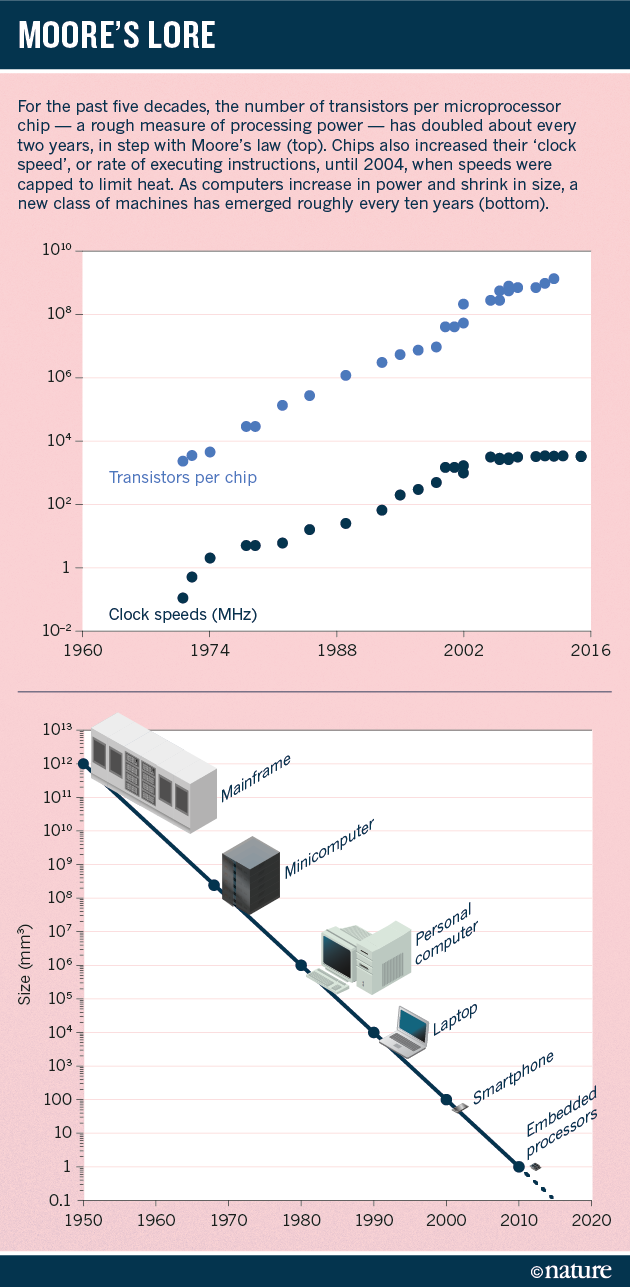
Source: Top, Intel; bottom, SIA/SRC
This was expensive. Improving a microprocessor's performance meant scaling down the elements of its circuit so that more of them could be packed together on the chip, and electrons could move between them more quickly. Scaling, in turn, required major refinements in photolithography, the basic technology for etching those microscopic elements onto a silicon surface. But the boom times were such that this hardly mattered: a self-reinforcing cycle set in. Chips were so versatile that manufacturers could make only a few types — processors and memory, mostly — and sell them in huge quantities. That gave them enough cash to cover the cost of upgrading their fabrication facilities, or 'fabs', and still drop the prices, thereby fuelling demand even further.

Soon, however, it became clear that this market-driven cycle could not sustain the relentless cadence of Moore's law by itself. The chip-making process was getting too complex, often involving hundreds of stages, which meant that taking the next step down in scale required a network of materials-suppliers and apparatus-makers to deliver the right upgrades at the right time. “If you need 40 kinds of equipment and only 39 are ready, then everything stops,” says Kenneth Flamm, an economist who studies the computer industry at the University of Texas at Austin.
To provide that coordination, the industry devised its first road map. The idea, says Gargini, was “that everyone would have a rough estimate of where they were going, and they could raise an alarm if they saw roadblocks ahead”. The US semiconductor industry launched the mapping effort in 1991, with hundreds of engineers from various companies working on the first report and its subsequent iterations, and Gargini, then the director of technology strategy at Intel, as its chair. In 1998, the effort became the International Technology Roadmap for Semiconductors, with participation from industry associations in Europe, Japan, Taiwan and South Korea. (This year's report, in keeping with its new approach, will be called the International Roadmap for Devices and Systems.)
“The road map was an incredibly interesting experiment,” says Flamm. “So far as I know, there is no example of anything like this in any other industry, where every manufacturer and supplier gets together and figures out what they are going to do.” In effect, it converted Moore's law from an empirical observation into a self-fulfilling prophecy: new chips followed the law because the industry made sure that they did.
And it all worked beautifully, says Flamm — right up until it didn't.
Heat death
The first stumbling block was not unexpected. Gargini and others had warned about it as far back as 1989. But it hit hard nonetheless: things got too small.
“It used to be that whenever we would scale to smaller feature size, good things happened automatically,” says Bill Bottoms, president of Third Millennium Test Solutions, an equipment manufacturer in Santa Clara. “The chips would go faster and consume less power.”
But in the early 2000s, when the features began to shrink below about 90 nanometres, that automatic benefit began to fail. As electrons had to move faster and faster through silicon circuits that were smaller and smaller, the chips began to get too hot.
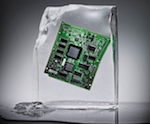
That was a fundamental problem. Heat is hard to get rid of, and no one wants to buy a mobile phone that burns their hand. So manufacturers seized on the only solutions they had, says Gargini. First, they stopped trying to increase 'clock rates' — how fast microprocessors execute instructions. This effectively put a speed limit on the chip's electrons and limited their ability to generate heat. The maximum clock rate hasn't budged since 2004.
Second, to keep the chips moving along the Moore's law performance curve despite the speed limit, they redesigned the internal circuitry so that each chip contained not one processor, or 'core', but two, four or more. (Four and eight are common in today's desktop computers and smartphones.) In principle, says Gargini, “you can have the same output with four cores going at 250 megahertz as one going at 1 gigahertz”. In practice, exploiting eight processors means that a problem has to be broken down into eight pieces — which for many algorithms is difficult to impossible. “The piece that can't be parallelized will limit your improvement,” says Gargini.
Even so, when combined with creative redesigns to compensate for electron leakage and other effects, these two solutions have enabled chip manufacturers to continue shrinking their circuits and keeping their transistor counts on track with Moore's law. The question now is what will happen in the early 2020s, when continued scaling is no longer possible with silicon because quantum effects have come into play. What comes next? “We're still struggling,” says An Chen, an electrical engineer who works for the international chipmaker GlobalFoundries in Santa Clara, California, and who chairs a committee of the new road map that is looking into the question.

That is not for a lack of ideas. One possibility is to embrace a completely new paradigm — something like quantum computing, which promises exponential speed-up for certain calculations, or neuromorphic computing, which aims to model processing elements on neurons in the brain. But none of these alternative paradigms has made it very far out of the laboratory. And many researchers think that quantum computing will offer advantages only for niche applications, rather than for the everyday tasks at which digital computing excels. “What does it mean to quantum-balance a chequebook?” wonders John Shalf, head of computer-science research at the Lawrence Berkeley National Laboratory in Berkeley, California.
Material differences
A different approach, which does stay in the digital realm, is the quest to find a 'millivolt switch': a material that could be used for devices at least as fast as their silicon counterparts, but that would generate much less heat. There are many candidates, ranging from 2D graphene-like compounds to spintronic materials that would compute by flipping electron spins rather than by moving electrons. “There is an enormous research space to be explored once you step outside the confines of the established technology,” says Thomas Theis, a physicist who directs the nanoelectronics initiative at the Semiconductor Research Corporation (SRC), a research-funding consortium in Durham, North Carolina.
“My bet is that we run out of money before we run out of physics.”
Unfortunately, no millivolt switch has made it out of the laboratory either. That leaves the architectural approach: stick with silicon, but configure it in entirely new ways. One popular option is to go 3D. Instead of etching flat circuits onto the surface of a silicon wafer, build skyscrapers: stack many thin layers of silicon with microcircuitry etched into each. In principle, this should make it possible to pack more computational power into the same space. In practice, however, this currently works only with memory chips, which do not have a heat problem: they use circuits that consume power only when a memory cell is accessed, which is not that often. One example is the Hybrid Memory Cube design, a stack of as many as eight memory layers that is being pursued by an industry consortium originally launched by Samsung and memory-maker Micron Technology in Boise, Idaho.

Microprocessors are more challenging: stacking layer after layer of hot things simply makes them hotter. But one way to get around that problem is to do away with separate memory and microprocessing chips, as well as the prodigious amount of heat — at least 50% of the total — that is now generated in shuttling data back and forth between the two. Instead, integrate them in the same nanoscale high-rise.
This is tricky, not least because current-generation microprocessors and memory chips are so different that they cannot be made on the same fab line; stacking them requires a complete redesign of the chip's structure. But several research groups are hoping to pull it off. Electrical engineer Subhasish Mitra and his colleagues at Stanford University in California have developed a hybrid architecture that stacks memory units together with transistors made from carbon nanotubes, which also carry current from layer to layer3. The group thinks that its architecture could reduce energy use to less than one-thousandth that of standard chips.
Going mobile
The second stumbling block for Moore's law was more of a surprise, but unfolded at roughly the same time as the first: computing went mobile.
Twenty-five years ago, computing was defined by the needs of desktop and laptop machines; supercomputers and data centres used essentially the same microprocessors, just packed together in much greater numbers. Not any more. Today, computing is increasingly defined by what high-end smartphones and tablets do — not to mention by smart watches and other wearables, as well as by the exploding number of smart devices in everything from bridges to the human body. And these mobile devices have priorities very different from those of their more sedentary cousins.

Keeping abreast of Moore's law is fairly far down on the list — if only because mobile applications and data have largely migrated to the worldwide network of server farms known as the cloud. Those server farms now dominate the market for powerful, cutting-edge microprocessors that do follow Moore's law. “What Google and Amazon decide to buy has a huge influence on what Intel decides to do,” says Reed.
Much more crucial for mobiles is the ability to survive for long periods on battery power while interacting with their surroundings and users. The chips in a typical smartphone must send and receive signals for voice calls, Wi-Fi, Bluetooth and the Global Positioning System, while also sensing touch, proximity, acceleration, magnetic fields — even fingerprints. On top of that, the device must host special-purpose circuits for power management, to keep all those functions from draining the battery.
The problem for chipmakers is that this specialization is undermining the self-reinforcing economic cycle that once kept Moore's law humming. “The old market was that you would make a few different things, but sell a whole lot of them,” says Reed. “The new market is that you have to make a lot of things, but sell a few hundred thousand apiece — so it had better be really cheap to design and fab them.”
Both are ongoing challenges. Getting separately manufactured technologies to work together harmoniously in a single device is often a nightmare, says Bottoms, who heads the new road map's committee on the subject. “Different components, different materials, electronics, photonics and so on, all in the same package — these are issues that will have to be solved by new architectures, new simulations, new switches and more.”

For many of the special-purpose circuits, design is still something of a cottage industry — which means slow and costly. At the University of California, Berkeley, electrical engineer Alberto Sangiovanni-Vincentelli and his colleagues are trying to change that: instead of starting from scratch each time, they think that people should create new devices by combining large chunks of existing circuitry that have known functionality4. “It's like using Lego blocks,” says Sangiovanni-Vincentelli. It's a challenge to make sure that the blocks work together, but “if you were to use older methods of design, costs would be prohibitive”.
Costs, not surprisingly, are very much on the chipmakers' minds these days. “The end of Moore's law is not a technical issue, it is an economic issue,” says Bottoms. Some companies, notably Intel, are still trying to shrink components before they hit the wall imposed by quantum effects, he says. But “the more we shrink, the more it costs”.
Every time the scale is halved, manufacturers need a whole new generation of ever more precise photolithography machines. Building a new fab line today requires an investment typically measured in many billions of dollars — something only a handful of companies can afford. And the fragmentation of the market triggered by mobile devices is making it harder to recoup that money. “As soon as the cost per transistor at the next node exceeds the existing cost,” says Bottoms, “the scaling stops.”
Many observers think that the industry is perilously close to that point already. “My bet is that we run out of money before we run out of physics,” says Reed.
Certainly it is true that rising costs over the past decade have forced a massive consolidation in the chip-making industry. Most of the world's production lines now belong to a comparative handful of multinationals such as Intel, Samsung and the Taiwan Semiconductor Manufacturing Company in Hsinchu. These manufacturing giants have tight relationships with the companies that supply them with materials and fabrication equipment; they are already coordinating, and no longer find the road-map process all that useful. “The chip manufacturer's buy-in is definitely less than before,” says Chen.

Take the SRC, which functions as the US industry's research agency: it was a long-time supporter of the road map, says SRC vice-president Steven Hillenius. “But about three years ago, the SRC contributions went away because the member companies didn't see the value in it.” The SRC, along with the SIA, wants to push a more long-term, basic research agenda and secure federal funding for it — possibly through the White House's National Strategic Computing Initiative, launched in July last year.
That agenda, laid out in a report5 last September, sketches out the research challenges ahead. Energy efficiency is an urgent priority — especially for the embedded smart sensors that comprise the 'Internet of things', which will need new technology to survive without batteries, using energy scavenged from ambient heat and vibration. Connectivity is equally key: billions of free-roaming devices trying to communicate with one another and the cloud will need huge amounts of bandwidth, which they can get if researchers can tap the once-unreachable terahertz band lying deep in the infrared spectrum. And security is crucial — the report calls for research into new ways to build in safeguards against cyberattack and data theft.
These priorities and others will give researchers plenty to work on in coming years. At least some industry insiders, including Shekhar Borkar, head of Intel's advanced microprocessor research, are optimists. Yes, he says, Moore's law is coming to an end in a literal sense, because the exponential growth in transistor count cannot continue. But from the consumer perspective, “Moore's law simply states that user value doubles every two years”. And in that form, the law will continue as long as the industry can keep stuffing its devices with new functionality.
The ideas are out there, says Borkar. “Our job is to engineer them.”
2ème appel Programme Erasmus+ 2 Mobilité Internationale de Crédits. Ouverture de l'appel à Candidatures : Du 07 Mars 2016 jusqu'au 23 Avril 2016 (12:00 AM Paris).

Le EMIC (Erasmus+ Mobilité Internationale de Crédits) est un nouveau programme de mobilité internationale financé par la Commission Européenne, basé sur l'excellence académique et scientifique entre l'Europe et les pays non européens, dans le cadre du programme Erasmus + 2014-2020.
L'objectif principal de ce programme est de renforcer la coopération entre les établissements d'enseignement supérieur des pays européens (dits "pays du programme") et des pays non européens (dits "pays partenaires"), grâce à l'attribution de bourses de mobilité d'excellence.
Le programme EMIC est un programme de bourses d’excellence offertes aux étudiants et personnels pour effectuer une mobilité à l'université de Perpignan Via Domitia (UPVD).
Les inscriptions se font en ligne.
Le lien vers l'ensemble des informations sur le programme et
ses critères est le suivant:
CALL FOR PAPERVol. 5(3), May, 2016 Management and Administrative Sciences

(ISSN: 2308-1368, 2310-872X)
Publication Fee
Online only: 100/- US Dollars
Management and Administrative Sciences Review (ISSN: 2308-1368, 2310-872X) is a double blind peer review journal, publishes 6 issues per year (January, March, May, July, September, November). Management and Administrative Sciences Review aims to promote and to provide worldwide research publications in all areas of Business and Management including but not limited to human resource management, organizational studies, innovation, leadership, economics, finance, commerce, supply chain & logistics management, marketing and operations management. Our dedicated technical and editorial team members ensure the quality of the published research articles. We have very reputable and dedicated editorial board members from different academic fields which ensures the quality and review standards according to the international research publishing standards and quick publication of research articles. All accepted and published articles are provided online with free access to provide the academic community with latest and quality research free. All accepted and published articles are provided online with free access to provide the academic community with latest and quality research.
You can submit the soft copy of your paper (manuscript) anytim
Current Issue Important Dates:
Coming Issue Publication Date: May 16, 2016
Paper must be sent via e-mail: Cette adresse e-mail est protégée contre les robots spammeurs. Vous devez activer le JavaScript pour la visualiser.
Note: Before submitting manuscript please refer author guidelines:
Constantine, Capitale 2015 de la Culture arabe » : Un salon du livre pour la fin de la manifestation
L’esplanade de l’université Mentouri de Constantine accueillera, dans le cadre des festivités organisées à l’occasion de la clôture de la manifestation «Constantine, capitale de la culture arabe», un Salon national du livre, et ce du 11 au 16 avril.
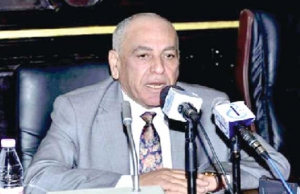
Lors d’une conférence de presse animée au siège du cabinet du wali, lundi, le président-directeur général de l’Entreprise nationale des arts graphiques (ENAG), Messaoudi Hamidou, a annoncé la participation de pas moins de 140 éditeurs et distributeurs de livres à ce Salon, sélectionnés sur une liste initiale comptant 500, en tenant compte de leur proximité avec la ville, qu’elle soit géographique, ou que lesdites maisons aient publié des ouvrages dans le cadre de l’événement culturel arabe, ou encore qu’ils disposent dans leur catalogue de livres en relation avec Constantine. Ainsi, le comité d’organisation a opté pour l’installation d’un chapiteau de 4.000 m2 qui accueillera «plusieurs milliers d’ouvrages publiés en Algérie et dans le monde entier». Le choix de l’université Mentouri paraît, à cet égard, des plus appropriés, vu que le site est bien desservi en transports en commun (bus, tramway), de même que cela assure une importante fréquentation du Salon de la part de la nombreuse communauté estudiantine. Outre l’exposition-vente des livres, notamment ceux édités par le commissariat de «Constantine, capitale de la culture arabe», le Salon comprendra des conférences-débats qui seront animés par des auteurs et des universitaires, à l’image de Nedjma Benachour, Waciny Laredj, Amine Zaoui et Abdallah Hammadi. Au sujet de la présence de Constantine au Salon international du livre de Paris, et dont elle était l’invitée d’honneur, le PDG de l’ENAG s’est déclaré satisfait des conditions dans lesquelles s’est opéré cette participation. «Les hommes de lettres et les personnalités sélectionnés ont dignement représenté la ville ; d’ailleurs, l’espace réservé à Constantine a vu défiler nombre de personnalités politiques françaises, dont le président François Hollande et le Premier ministre Manuel Valls », a-t-il notamment avancé. Enfin, à une question relative à l’absence de maisons d’édition arabes, annoncées pourtant dans un premier temps par le commissariat de l’événement, M. Hamidou a affirmé que cela est dû à la conjoncture économique actuelle. «Nous nous sommes entendus avec la tutelle sur la nécessité de ne conférer qu’un cachet national à ce Salon, autrement il nous aurait fallu demander une rallonge budgétaire au ministère des Finances, ce qui aurait été malvenu», tout en précisant que le Qalon a nécessité une enveloppe de 30 millions DA. Pour rappel, le Salon national du livre de Constantine a été précédé par l’organisation de deux expositions du livre au niveau de l’esplanade attenante à la place du 1er-Novembre (ex-La Brèche).
Issam B.
 Twitter
 Facebook